Why Customers Buy More When They Can “Try Before They Buy”
In the fast-moving world of fashion e-commerce, one challenge continues to affect even the most successful online brands: customers hesitate before purchasing clothing online. Unlike physical retail stores, digital shopping lacks the confidence-building experience of trying products on before making a decision.
As online fashion shopping continues to grow, consumer expectations are evolving just as quickly. Today’s shoppers want more than product photos and size charts — they want certainty, personalization, and interaction. This is exactly why AI virtual try-on technology is becoming one of the most powerful tools in modern fashion e-commerce.
The ability to “try before you buy” is no longer a luxury feature. It’s becoming a critical driver of customer confidence, higher e-commerce conversion rates, and lower return rates.
The Biggest Challenges in Online Fashion Shopping
Fashion is one of the most emotionally driven industries in e-commerce. Customers are not simply buying clothing — they are buying confidence, identity, and self-expression.
However, online shopping creates several major barriers that disrupt purchasing decisions:
- Sizing uncertainty
- Inconsistent product visualization
- Fear of poor fit
- Lack of personalization
- Limited customer engagement
- Shopping friction during checkout
Customers often struggle to imagine how a garment will actually look on their body type, skin tone, or personal style. A product image on a model rarely answers the customer’s most important question:
“Will this look good on me?”
When shoppers cannot confidently answer that question, hesitation increases dramatically.
This uncertainty directly contributes to:
- Cart abandonment
- Lower conversion rates
- High return rates
- Reduced customer trust
- Shorter customer lifetime value
For fashion retailers and D2C brands, these issues can significantly impact profitability and long-term growth.
Why Customers Hesitate to Buy Clothing Online
Consumer psychology plays a massive role in purchasing behavior. People naturally avoid decisions that feel risky or uncertain.
In traditional retail stores, customers reduce uncertainty by:
- Trying garments on
- Checking fit and appearance
- Seeing fabrics in motion
- Comparing styles instantly
Online fashion shopping removes these confidence-building experiences.
Without physical interaction, the brain fills in gaps with doubt:“What if it doesn’t fit?”
- “What if it looks different in person?”
- “Will this style suit me?”
- “What if I have to return it?”
The greater the uncertainty, the lower the likelihood of completing a purchase.
This is why fashion e-commerce brands often experience higher cart abandonment compared to other industries. Customers may love the product, but uncertainty delays decision-making.
The Psychology Behind “Try Before You Buy”
The concept of “try before you buy” works because it activates powerful psychological triggers that influence consumer confidence and emotional connection.
1. Visualization Creates Emotional Ownership
Research consistently shows that customers are more likely to purchase products when they can visualize themselves using them.
This is known as the visualization effect.
When shoppers see themselves wearing an item through a virtual clothing try-on experience, the product becomes emotionally connected to their identity. The brain begins to treat the item as something it already owns.
This emotional ownership increases purchase intent dramatically.
2. Reduced Uncertainty Increases Confidence
Confidence is one of the strongest drivers of online purchasing decisions.
The more certain customers feel about:
- Fit
- Style
- Appearance
- Compatibility
…the faster they move toward checkout.
A virtual fitting room reduces hesitation by replacing imagination with realistic visualization.
Instead of guessing, shoppers can see.
3. Interactive Experiences Increase Engagement
Modern consumers expect interactive shopping experiences.
Static product pages are no longer enough to maintain attention in competitive fashion e-commerce markets.
Interactive AI shopping experiences keep customers engaged longer by encouraging exploration, experimentation, and personalization.
The longer users interact with products, the more emotionally invested they become.
How AI Virtual Try-On Improves Customer Confidence
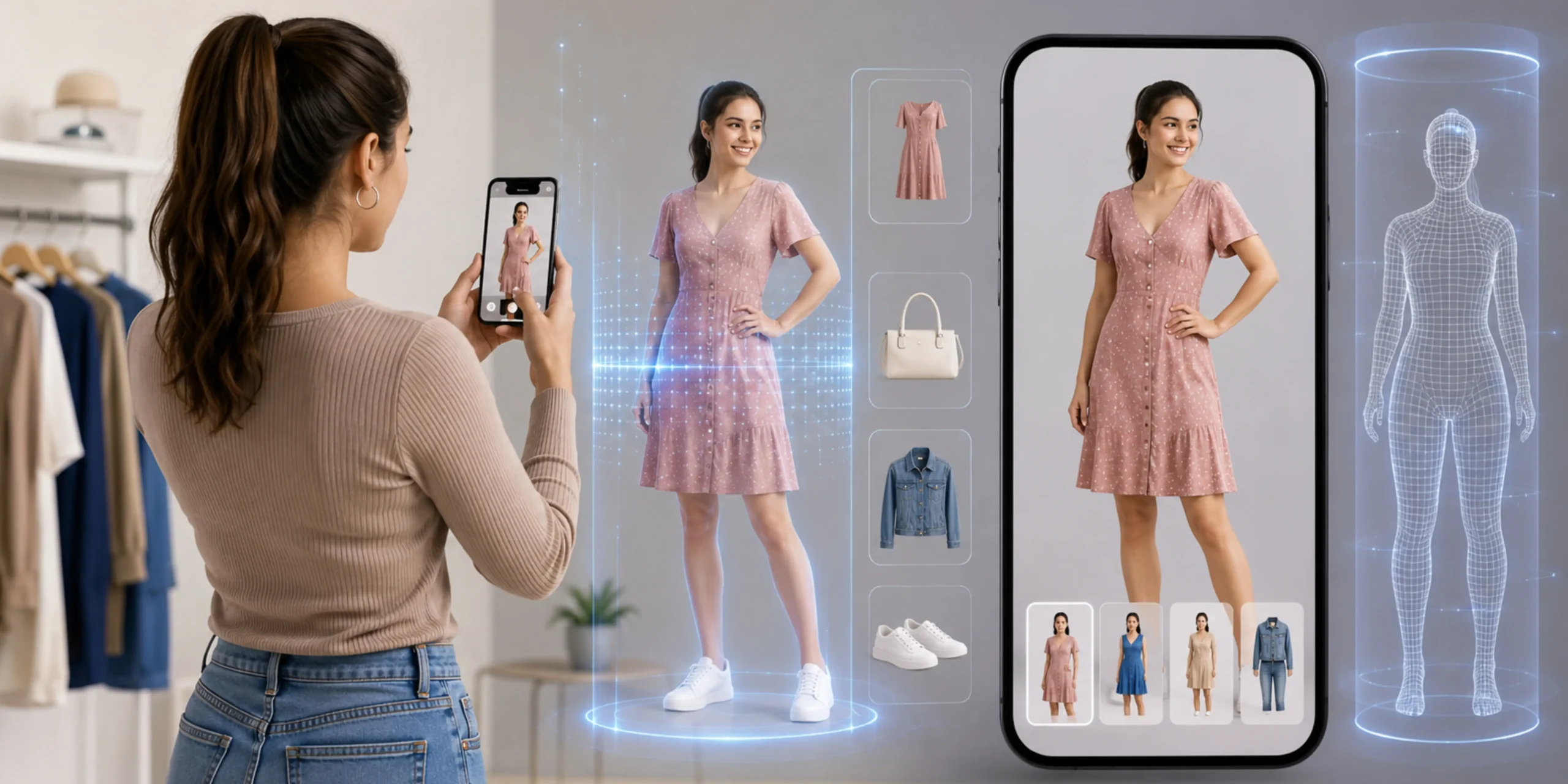
AI fashion technology is transforming how consumers shop online by making digital experiences feel more personal and realistic.
An AI virtual try-on system allows customers to see how garments, accessories, or outfits may look on them before making a purchase.
This changes the entire decision-making process.
Customers Feel More Certain About Their Purchases
A virtual outfit try-on experience helps shoppers
- Visualize clothing realistically
- Compare styles more confidently
- Reduce sizing anxiety
- Make faster purchase decisions
This directly improves customer trust and satisfaction.
Personalization Creates Stronger Emotional Connections
Today’s shoppers want personalized shopping experiences tailored to their appearance and preferences.
AI-powered systems can deliver this by helping customers interact with products in ways traditional product photography cannot.
When customers feel understood and represented, brand loyalty increases significantly.
Reduced Returns and Shopping Friction
One of the biggest pain points in fashion e-commerce is product returns.
Returns often happen because:
- Customers expected a different fit
- The style looked different in reality
- The item didn’t match their expectations
Virtual fitting room technology helps align customer expectations before purchase, reducing dissatisfaction and minimizing costly returns.
Business Benefits for Fashion E-Commerce Brands
The impact of AI virtual try-on extends beyond customer experience. It also delivers measurable business benefits.
Higher E-Commerce Conversion Rates
When customers feel confident, they buy faster.
Brands using AI shopping experience tools often see improvements in:
- Conversion rates
- Average order value
- Time spent on site
- Customer engagement
Lower Return Rates
Reducing uncertainty before purchase leads to fewer post-purchase disappointments.
This helps brands lower the following:
- Return processing costs
- Shipping expenses
- Inventory disruption
Increased Customer Retention
Personalized experiences encourage repeat purchases.
Customers are more likely to return to brands that offer:
- Convenience
- Confidence
- Interactive shopping tools
- Personalized recommendations
The Future of Interactive Shopping
The future of fashion e-commerce is deeply connected to AI-driven personalization and immersive digital experiences.
Consumers increasingly expect the following:
- Real-time personalization
- Interactive product experiences
- AI-powered recommendations
- Virtual outfit try-on capabilities
As AI fashion technology evolves, shopping experiences will become even more realistic, intuitive, and customer-centric.
The brands that embrace these innovations early will gain a significant competitive advantage in customer engagement and loyalty.
Final Thoughts
The psychology behind “try before you buy” is simple: customers purchase more when they feel confident, emotionally connected, and certain about their decisions.
AI virtual try-on technology bridges the gap between physical retail confidence and digital convenience. It reduces hesitation, improves trust, and creates a smarter online fashion shopping experience.
This is where solutions like 3D Measure Up are helping redefine the future of fashion e-commerce.
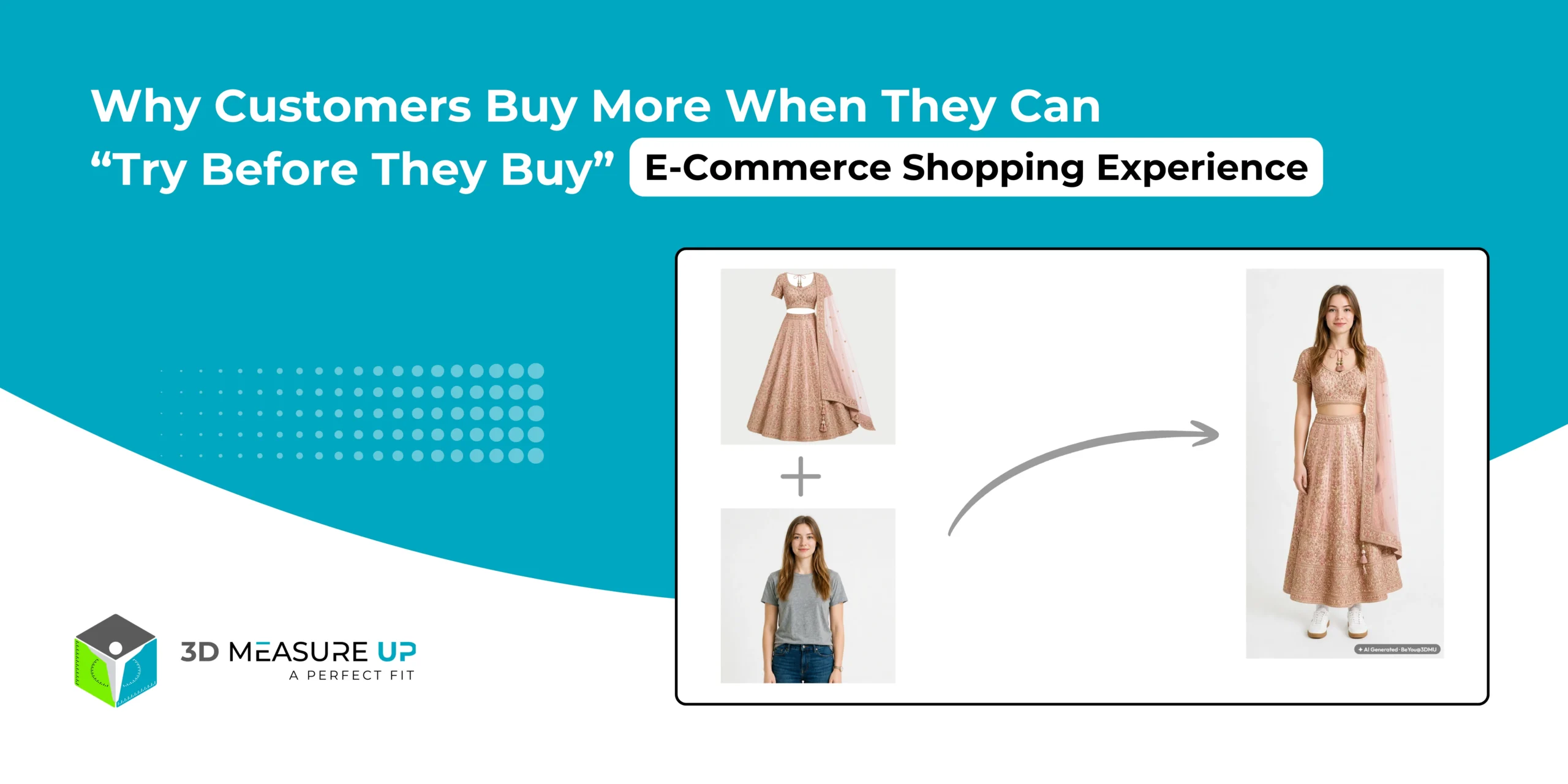
With 3D Measure Up’s AI-Powered Virtual Try-On technology, customers can upload a photo of themselves along with an image of a garment. The AI then generates a realistic image showing the person wearing the selected item, whether the clothing is displayed alone or worn by another person.
The platform helps brands create more convenient and intelligent shopping experiences through features like the following:
- Precise Body Recognition
- Multiple Clothing Styles
- Real-Time Try-On Effect
- 360-Degree Display
By combining personalization, visualization, and AI shopping experience technology, brands can reduce customer hesitation while improving engagement and e-commerce conversion rates.
Try for FREE:
https://virtual-tryon.3dmeasureup.ai/